About Fan Palm Tree
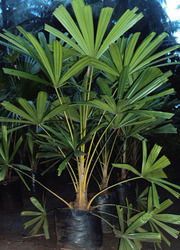
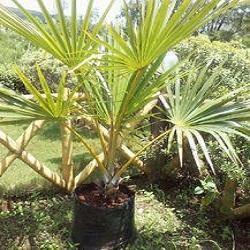
Fan leaves from the palmate palms are typically circular or paddle shaped, or shaped like a portion of a circle (half moon). The leaf may be divided into segments or entire, without divisions. Most fan palm leaves do have divisions into segments. They can even be severely divided like the spokes of a bicycle wheel, with the air space between the segments extending deep into the central leaf.
Rhapis and some
Livistona species are examples of this. Or, they can be near complete without divisions or segments.
Licuala elegans is an example of this. The individual portions of the fan leaf are known as segments rather than leaflets. The palmate character of the leaf reminds one of his palm and hand, with you fingers being the segments of the leaf (thus the name "palmate" palm)
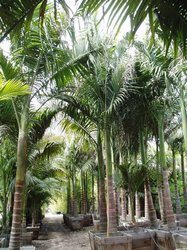
Striking Foliage for Elegant LandscapesFan Palm Trees add elegance and tropical appeal to gardens and public spaces. Their lush, palmate leaves not only provide visual interest but also offer practical shade. These resilient trees flourish with minimal care, making them a sustainable addition to both private gardens and large-scale landscaping projects.
Ideal Growing Conditions and CareTo ensure healthy growth, plant Fan Palm Trees in sandy, well-drained soil with access to full sunlight or partial shade. They prosper with moderate watering, suiting various outdoor settings in warm climates. Their perennial nature and minimal maintenance requirements make them especially attractive for long-term landscaping solutions.
FAQs of Fan Palm Tree:
Q: How do you propagate Fan Palm Trees?
A: Fan Palm Trees are propagated primarily through seeds. The seeds should be sown in well-drained, sandy soil and kept moist until germination. Warm temperatures and consistent moisture encourage healthy seedling development.
Q: What type of environment is best for Fan Palm Trees?
A: Fan Palm Trees flourish in warm climates with plenty of sunlight but can handle partial shade. They require well-drained, sandy soil and moderate watering, making them suitable for tropical or subtropical locations.
Q: When is the best time to plant Fan Palm Trees?
A: The best time to plant Fan Palm Trees is during the warmer months, typically in spring or early summer, to allow strong root development before cooler weather arrives.
Q: Where can Fan Palm Trees be used in landscaping?
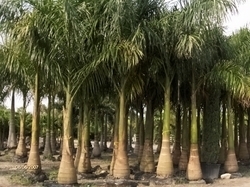
A: Fan Palm Trees are ideal for ornamental landscaping, serving as striking accent plants or providing shade along walkways, gardens, parks, and commercial properties due to their tall stature and elegant foliage.
Q: What is the process for maintaining a Fan Palm Tree?
A: Fan Palm Trees are low-maintenance; routine care includes occasional pruning of dead leaves, moderate watering, and ensuring the soil remains well-drained. Regular checks for pests or diseases help maintain overall health.
Q: What benefits do Fan Palm Trees offer in landscaping projects?
A: Fan Palm Trees provide aesthetic enhancement, significant shade, and a tropical ambiance. Their resilience and low maintenance make them a cost-effective choice for both private and commercial landscapes.










 Send Inquiry

 Send Inquiry